
Startup Investment Dynamics: KSA Guide 2027
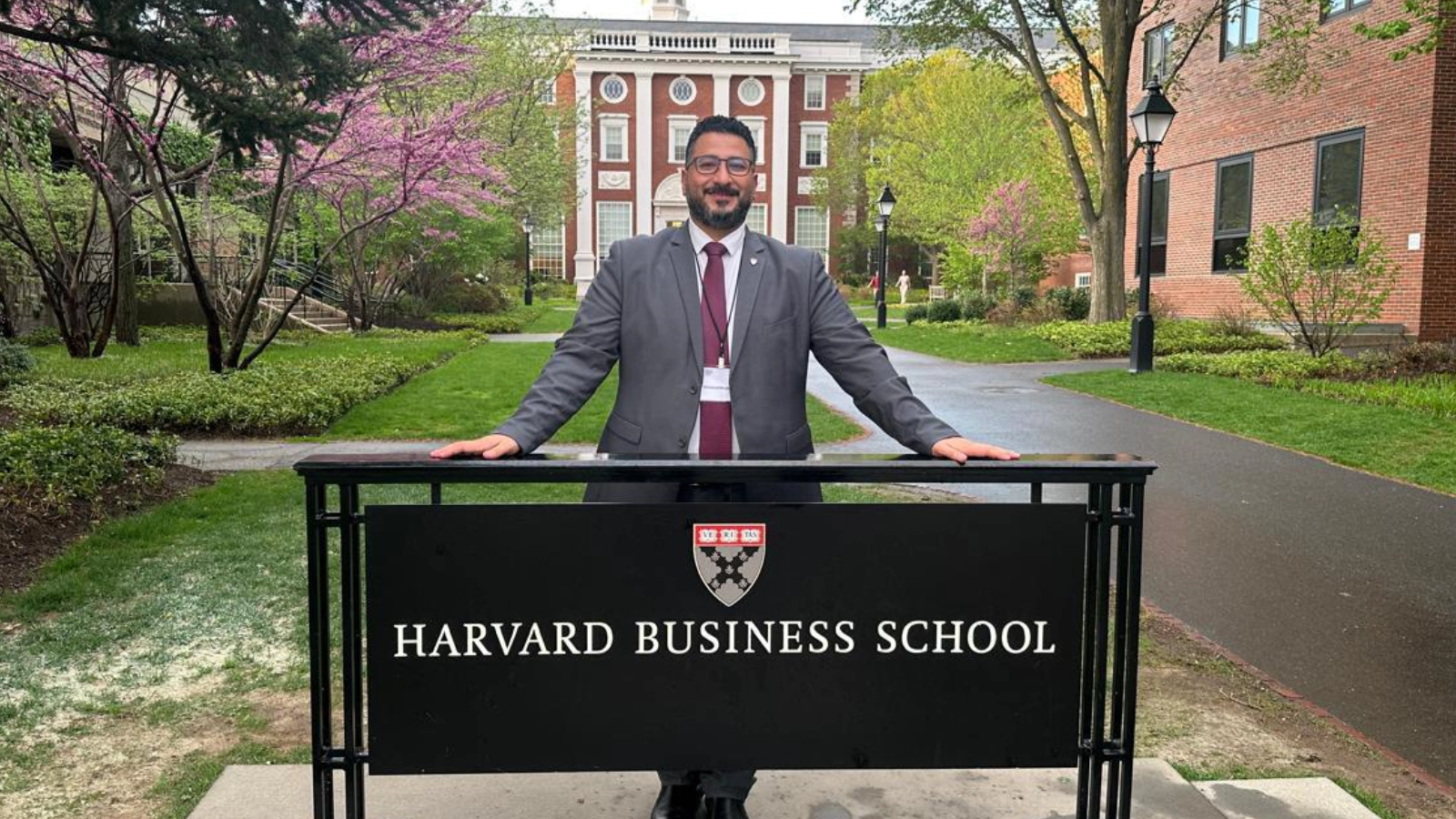
Bringing a unique approach that bridges high-stakes venture capital with large-scale industrial execution, Mohamed Mashaal, renowned Venture Capital Strategist, Entrepreneur-in-Residence, and Startup Mentor at the forefront of the Middle East’s economic transformation, operates at the intersection of international business, FinTech, and digital transformation. Mashaal is currently driving forward-looking mobility initiatives aligned with Saudi Vision 2030 beside active, direct mentorship of 10+ active startups between the Pre-Seed and Series A phases. By connecting global technology enablers, sovereign mega-projects, and regulatory frameworks, he brings invaluable, on-the-ground clarity to the evolving economics of early-stage tech and the future of global investment.
KSA Startup Investment Economy 2027: Saudi Venture Capital at a Crossroads
Saudi Arabia continues to anchor venture activity across the MENA region, supported by extensive sovereign, corporate, and private financing channels. While recent macroeconomic headwinds have tempered early-stage momentum in 2026, the underlying market fundamentals remain defined by significant multi-year capital commitments and resilient growth-stage funding:
Saudi Arabia Dominates Regional Capital Deployment: Saudi Arabia led the MENA region in venture-capital investment for the third consecutive year in 2025, deploying a record $1.72 billion across 257 deals (following an accelerated H1 2025 deployment of $860 million).
Corporate and Sovereign Capital Commitment at Scale: Domestic startup funding is sustained by multi-billion-dollar state and corporate allocations, including Aramco's $7.5 billion total venture allocation (anchored by an added $4 billion to Aramco Ventures and the $500 million Wa’ed Ventures fund), PIF-owned Jada's SAR 4 billion fund-of-funds base, Sanabil's institutional private-market commitment of approximately $2 billion per year, and Abdul Latif Jameel providing over SAR 4.2 billion in cumulative financing to more than 294,000 micro, small, and medium-sized enterprises (MSMEs) and entrepreneurs across sectors like technology, manufacturing, tourism, and entertainment. In parallel, strategic government funding and national development loans continue to de-risk ecosystem infrastructure.
Funding and deal activity across stages: In 9M 2026, Saudi Arabia raised $1B across 113 deals; representing a 29% drop in total funding and a 39% decline in deal count YoY; driven by softening early-stage activity, while Series A remained comparatively resilient despite a 17% contraction.
Are startups getting the best out of the ecosystem? Learn more.
Founder Insights into the 2027 KSA Startup Ecosystem
A Privileged KSA Founder Minority
Across Saudi Arabia’s burgeoning startup landscape, the flow of venture capital reveals a huge contrast. Rather than a rising tide lifting all early-stage ventures, substantial capital remains concentrated within a select tier of favored sectors. While the kingdom’s broader ecosystem garners international headlines for landmark deals and sovereign-backed initiatives, the vast majority of founders outside these spotlighted verticals find themselves on the periphery.
For this privileged minority, deep pockets fuel aggressive scaling, but for everyone else, the uneven distribution leaves high-potential ideas competing for an exceptionally narrow pool of capital, entrenching market advantages among a chosen few, pre-seed founders report.
Affordability Versus Accessibility in Talents
This capital disparity directly fuels another mounting crisis on the ground: an intense bottleneck in talent acquisition. As well-capitalized firms inflate market compensation to secure elite professionals, early-stage and bootstrapped founders face an uphill battle to staff their operations.
Recruiting qualified personnel at sustainable wage rates has become nearly prohibitive, forcing resource-constrained entrepreneurs into a difficult compromise between burning through meager reserves or settling for skills gaps in critical roles. In an environment racing toward rapid digital and economic transformation, the scarcity of accessible talent threatens to stall promising ventures long before they ever reach market scale.
KSA Market, KSA Rules
Penetrating the market of Saudi Arabia using a generalized Gulf framework represents a value-diluting misstep for international commercial entities.
Conceptualizing the Kingdom as an expanded subsidiary ignores a core operational reality: Saudi Arabia functions as an independent economic gravitational center defined by distinct cultural dynamics, diverse regional sub-demographics, and evolving consumer mindsets.
Culture Eats Strategy for Breakfast.
Commercial plays relying on standardized pan-GCC marketing frameworks encounter immediate market resistance, as regional stakeholders routinely reject non-localized strategies lacking genuine cultural alignment, constituting a strategic dissociation based on three key realities:
Enterprise sales dynamics remain deeply rooted in institutional relationships, physical presence, and direct integration with Saudi Vision 2030 priorities
Consumer journeys must be organically anchored in natural Saudi consumer behaviors rather than transactional vendor evaluations
Culture eats strategy for breakfast in marketing, messaging, and commercialization; even the biggest corporations fail to grasp this reality in KSA, and startups are not so different
The KSA New Startup Culture
Not long ago in Riyadh and Cairo, joining an early-stage startup carried a distinct social stigma.
A decade ago, if you told someone you were working at a startup, they assumed you were simply unemployed.
Following university graduation, convention once dictated that graduates almost exclusively pursued stable roles within top-tier banks or established corporate giant, which was always the case in Cairo, Riyadh, Dubai, and Abu Dhabi while joining early-stage, high-risk startups was practically dismissed out of hand.
Today, this outlook has undergone a complete transformation. Far from being a product of market chance or excess global capital, this cultural pivot was deliberately cultivated through the sustained work of early ecosystem pioneers, academic incubators, and state-supported innovation programs. Mentorship spearheaded at vanguard institutions such as King Abdullah University of Science and Technology (KAUST) alongside campus-led programs across Egypt and the broader GCC, methodically repositioned entrepreneurship into a premier, highly regarded career pursuit.
Now, university students are actively building minimum viable products (MVPs) long before graduation, shifting national mindsets across Saudi Arabia and the wider region. But as the ecosystem matures, the archetypal image of who actually wins the startup game is undergoing a profound reassessment.
Work Harder, Even When Not Younger
Across Silicon Valley and Western innovation hubs, global venture data points to an emerging phenomenon: the rise of single-person founding teams, accelerated by AI-driven development tools, low-code platforms, and automated workflow infrastructure.
The Middle East has historically operated on a customized adoption model that varies in latency when compared to Western models.
Trends emerge abroad, take time to mature, and are then localized to fit domestic structural realities. Between 80% and 90% of venture-backed startups across Saudi Arabia and the wider region remain fundamentally team sports. You cannot run a complex operation here entirely alone unless you are operating in a specialized, deeply technical software vertical where a lone technical architect can engineer the initial IP via automated coding engines.
Yet, when institutional capital evaluates single-operator ventures in the region, the historical dogmatic bias against solo founders is beginning to crack. The investment committee’s primary question is no longer whether a deck lists three co-founders; it is whether the person at the helm can execute without burning through capital.
High-growth regional scale-ups clearly demonstrate that concise founding structures present no barrier to substantial commercial valuation. Prominent ecosystem players such as Lean Technologies and financial technology powerhouse Tabby, co-founded by Hosam Arab, have successfully achieved multi-billion-dollar enterprise valuations while modernizing Middle Eastern digital finance without expanding their core management teams unnecessarily.
The real shift in the solo-founder dynamic is demographic. Global venture benchmarks indicate a noticeable demographic spike: early-stage founders aged 40 and older are launching and scaling startups at a rate significantly outpacing their younger counterparts.
The 22-year-old first-time founder typically builds in peer cohorts because they rely on communal problem-solving and shared labor. The seasoned, 45-year-old operator moves with surgical precision.
Experienced operators understand the difference between working hard and working strategically. When you reach a certain level of executive maturity, you possess accumulated scar tissue. You’ve seen governance failures, you’ve navigated shareholder deadlocks, and you know that poorly aligned co-founder marriages are one of the leading causes of early-stage corporate death.
Rather than surrendering 30% to 50% of cap-table equity to recruit a co-founder for a specialized operational need, mature founders unbundle the executive suite:
Fractionalized Expertise and Vesting Tranches: They recruit high-caliber department heads through performance-associated equity tranches rather than handing over day-one co-founder status.
Agentic Tech Stacks: Instead of relying on a dedicated technical co-founder to build an initial product, they integrate specialized software platforms, contract engineering pods, and agentic workflows to ship enterprise-grade code.
Modular Executive Roles: Essential administrative, marketing, or financial functions are handed off to specialized external agencies and software-as-a-service platforms, preserving strategic control for the core visionary.
Learn how Lab1K’s specialized Startup Support Programs can help in end-to-end startup building architecture.
The New Metric That Actually Matters
This shift toward founder maturity parallels a rigorous financial reckoning across the broader market. The era of subsidizing unviable consumer unit economics under the guise of "blitzscaling" has officially closed.
Although flagship seed-stage incubators still bring in high-potential models in pre-monetization, pre-commercialization phases, post-cohort commercial benchmarks have tightened significantly. Throughout premier domestic and global accelerators, monthly recurring revenue (MRR) targets have expanded threefold across recent cohorts. Sustainable cash generation and firm contractual commitments are no longer deferred maturity indicators; they serve as fundamental initial proof points.
Growth at all costs only works if you simultaneously achieve unbreakable customer retention
Neglecting high customer acquisition costs to support transactional, high-churn end users represents a fundamentally value-destructive strategy. Once a digital platform seamlessly embeds into core daily workflows, customer retention stabilizes as switching friction becomes nearly insurmountable.
The “Grow at Any Cost” mindset will still live in 2027, but not at the expense of LTV and CAC.
KSA Startups Economics in 2027
Looking toward the macroeconomic landscape of late 2026 and 2027, the regional venture ecosystem faces a divergence of fortunes. With broader global markets experiencing persistent inflationary friction, supply-chain restructuring, and constrained consumer wallets, the mandate for regional survival demands disciplined sector selection.
Any venture dependent on purely discretionary household expenditure or superficial e-commerce delivery will face an uphill battle. Consumers pull back during periods of macro contraction. The capital is moving decisively toward sovereign-aligned initiatives, industrial infrastructure, and defensive deep tech.
The sectors positioned to capture capital and enterprise contracts over the coming cycle reflect this flight to quality:
AI-Native Enterprise and Mobility: Integrated fleet operating platforms, electric vehicle infrastructure, and autonomous systems aligned with national transit directives.
Dual-Use Defense Tech: Hardware, surveillance, and autonomous aviation startups that can pivot consumer or agricultural drone platforms into institutional border monitoring and defense applications.
BioTech and Healthcare Infrastructure: Localized medical innovation, pharmaceutical supply chains, and digital health infrastructure serving growing national demographics.
The KSA Startup Landscape in a Nutshell
Winning in this mature landscape requires a complete inversion of early venture assumptions. The founders best positioned to command capital are those pairing deep sector experience with lean startup experience and highly optimized processes, such as leveraging AI-native tooling, fractional leadership, and unbreakable retention mechanisms to build durable moats.
Simultaneously, investment is concentrating where domestic demand is structural rather than discretionary: in high-conviction deep tech, smart mobility, enterprise platforms, and defensive industrial infrastructure directly tied to Saudi Vision 2030 objectives.
For startups navigating the road to 2027, the mandate is clear: long-term enterprise value will not be measured by the capital raised on day one, but by the contractual revenue, operational substance, and tangible economic impact delivered on the ground.